A dark grey sofa is a powerhouse investment for modern living rooms. It’s neutral enough to anchor almost any aesthetic, durable enough to handle real life, and versatile enough to shine whether your style leans minimal, eclectic, or somewhere in between. But here’s the thing: a dark grey sofa can also feel heavy or moody if you don’t balance it right. The good news is that with the right color palette, textures, lighting, and accessories, a dark grey sofa becomes the foundation for a stunning room that feels both sophisticated and lived-in. Let’s walk through eight practical approaches to make your dark grey sofa the star of your space.
Table of Contents
ToggleKey Takeaways
- Dark grey sofa living room ideas rely on contrast—pair your sofa with walls at least 2–3 shades lighter to prevent the room from feeling heavy or cave-like.
- Layer textures and fabrics including throw pillows, rugs, and mixed materials to add visual richness and prevent a sterile, showroom appearance around a dark grey sofa.
- Lighting is essential for dark sofas; use warm white bulbs (2700K) from multiple sources like floor lamps, sconces, and dimmers to showcase the sofa’s depth and warmth.
- Accessorize with the 60-30-10 rule—60% neutral, 30% secondary color, and 10% accent color—to keep a dark grey sofa-centered room balanced and intentional without visual clutter.
- Choose wall colors like cream, soft greige, or pale sage to add warmth and prevent dark tones from competing with a dark grey sofa’s sophisticated aesthetic.
Why Dark Grey Sofas Are Perfect for Modern Living Rooms
Dark grey sofas hit a sweet spot that lighter fabrics and bolder colors often miss. They’re sophisticated without feeling pretentious, forgiving when it comes to dirt and wear, and they pair beautifully with nearly every color temperature, warm woods, cool metals, warm or cool paint tones, all work. Unlike pure black, dark grey has enough visual softness to feel inviting rather than stark. Unlike light grey, it won’t show every speck of dust or pet hair.
From a design perspective, dark grey acts as a visual anchor that lets other elements, art, lighting, accent colors, take turns in the spotlight. It won’t compete with a feature wall or a bold rug. This is why designers lean on dark grey sofas in both residential and high-end hospitality spaces: it’s the reliable workhorse that lets you experiment.
The material matters, though. A dark grey sofa in microfiber cleans differently than one in wool blend or performance fabric. When you’re shopping, test how the shade reads in your actual room lighting, daylight versus artificial light can shift perception significantly. A sofa that looks perfect in the showroom might read differently at home.
Creating Contrast With Wall Colors and Paint
Wall color is your first tool for either grounding or lifting a dark grey sofa. Too much dark around it (dark walls, dark flooring, dark furniture) and the room feels cave-like. The right contrast opens it up.
Light and Neutral Walls for Maximum Impact
White, cream, soft taupe, or very pale blue walls make dark grey sofas pop without stealing attention. Aim for walls that are at least 2–3 shades lighter than your sofa: this creates visual separation and makes the room feel more open. Warm whites (with a whisper of yellow or beige undertone) pair well with dark grey in spaces with warm-toned wood or brass accents. Cool whites (with slight blue undertone) work better if your metals are silver or chrome and your wood is contemporary.
If all-white feels too clinical, soft greige (grey-beige hybrid) adds warmth without muddying the room. A very pale sage or dusty blue can also work beautifully, especially if you have plants or want a calming, almost spa-like feeling. The key is restraint: these accent wall colors should whisper, not shout. Paint samples on large poster board and observe them in your room at different times of day before committing. Lighting changes how colors read, and you don’t want to paint only to realize the shade reads greenish at night or too pink in morning sun.
Ifacing two-tone walls (darker lower half, lighter upper half) is another option if your space has high ceilings. The darker lower band grounds the sofa without overwhelming the entire room, and the lighter upper half keeps the space feeling airy. When painting, use a primer-in-one product if switching from dark to light, and always use painter’s tape for clean lines.
Layering Textures and Fabrics Around Your Sofa
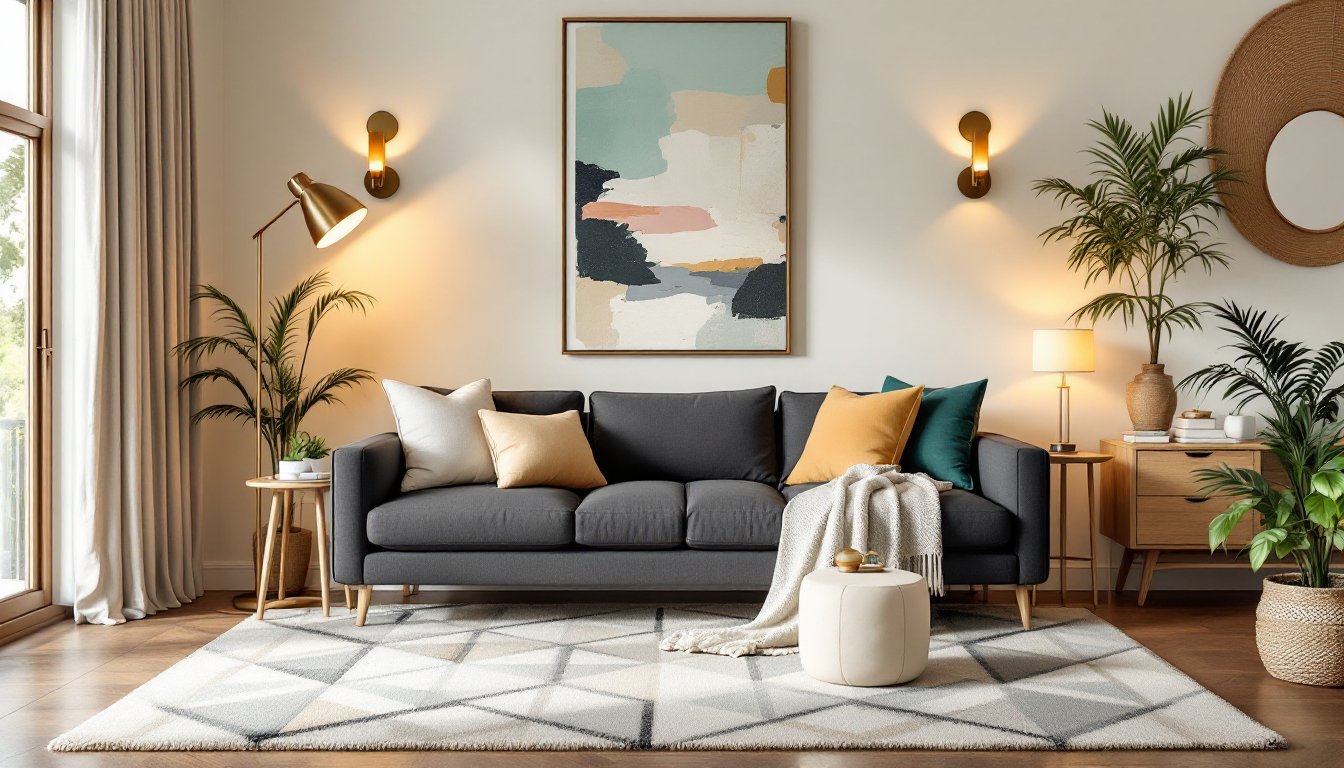
A flat, one-texture room with a dark grey sofa will feel sterile. Layers invite the eye to linger and make a space feel intentional and curated. Start by adding throw pillows in complementary fabrics: linen, velvet, wool, cotton blends, even a subtle geometric print in cream or soft gold. Mix matte and slightly lustrous finishes. A chunky knit throw draped over the arm adds tactile interest without being fussy.
Consider a rug underneath or in front of the sofa. A natural jute or sisal rug grounds the sofa in a neutral way: a patterned wool rug (with warm or cool undertones depending on your wall color and accent palette) can define the seating area and add visual richness. Rugs in charcoal, warm grey, cream, or even a muted geometric pattern all work, though avoid anything too matchy with the sofa, you want contrast, not camouflage.
Further out, add a mix of materials: wood side tables, metal lamps, upholstered ottomans or benches. Textured wall art, woven tapestries, linen-backed prints, or wood wall sculptures, breaks up blank walls. If you’ve got modern interior design inspiration in mind, layering is how you avoid the “showroom” look where everything feels too perfect. Real rooms have patina, mixed finishes, and a bit of visual complexity. This is especially true around a dark sofa, which needs visual relief to feel warm rather than somber.
Lighting Solutions to Brighten Your Dark Grey Focal Point
Lighting is non-negotiable when you have a dark sofa. Without it, you’ll lose the sofa’s shape and color depth in the evening, and the room will feel gloomy. A single overhead light isn’t enough.
Layer your lighting with multiple sources: floor lamps on either side of the sofa (or beside adjacent chairs), table lamps on side tables, and perhaps a dimmer-controlled ceiling fixture for overall brightness. Wall-mounted sconces flanking a piece of art above the sofa add ambiance and sophistication. Choose fixtures that complement your style, brushed brass for warmth, matte black for contemporary edge, or natural wood for organic feel.
Bulb temperature matters. Warm white (2700K) light flatters dark grey and creates coziness: cool white (4000K+) can make dark grey look flat and cold. Aim for 2700K in your ambient and task lighting, especially in lamps closest to the sofa. If you’ve got a bright, north-facing room, you can get away with slightly cooler light, but warm is safer.
Consider LED strip lighting behind floating shelves or along a media console, it adds depth and makes the space feel curated. The soft backlight draws the eye deeper into the room and away from the sofa’s darkness, making the whole space feel more dynamic. String lights (if your style allows) or candles in varying heights also soften a dark sofa and invite people to sit.
Accessorizing Your Dark Grey Sofa With Color and Pattern
Here’s where personality enters. A dark grey sofa is a blank canvas, but that doesn’t mean it should stay neutral. Warm golds, soft blues, terracottas, sage greens, and even mustard tones work beautifully against dark grey, use them sparingly in pillows, artwork, plants, or a single accent piece.
Pattern works too. A geometric throw pillow, a striped rug, or a patterned wallpaper accent wall adds movement and prevents the room from feeling too serious. Just keep patterns in a similar color family as your walls and lighting scheme so they harmonize rather than clash. Warm neutrals (cream, taupe, soft gold) with dark grey always reads as sophisticated: pops of jewel tone (emerald, sapphire, rust) add richness without feeling chaotic.
Artwork, mirrors, and sculptural objects matter more around a dark sofa because they define what the space is about. A large mirror opposite a window reflects light back into the room and makes the space feel bigger. A gallery wall with mixed frame finishes and art styles creates visual interest. Plants, especially those with lighter foliage or interesting shapes, bring life and color contrast.
According to home decor styling experts, accessories should follow a 60-30-10 rule: 60% neutral (your walls and sofa), 30% secondary color (your rug or accent wall color), and 10% accent color or pattern (pillows, art, one bold object). This keeps the room balanced. Too many competing colors or patterns will fight the dark sofa: too few and it feels empty. The sweet spot is intentional restraint.
Conclusion
A dark grey sofa isn’t a liability, it’s a design asset when you approach it strategically. Pair it with lighter walls, layer in textures, add thoughtful lighting, and accessorize with intention. The result is a living room that feels sophisticated, balanced, and genuinely livable. Modern home design trends continue to favor dark sofas as anchors precisely because they work. Give yours the supporting cast it deserves, and you’ll have a space you love for years to come.