Blue and gold is a timeless color combination that brings both elegance and warmth into a living room. The deep richness of blue paired with the luxurious gleam of gold creates a sophisticated atmosphere that works across modern, traditional, and eclectic styles. Whether you’re starting fresh with a complete redesign or refreshing a tired space with strategic updates, blue and gold offers flexibility, it scales from bold accent walls to subtle metallic accents. This guide walks through practical design approaches, material choices, and DIY updates that homeowners can tackle themselves, from paint selection to furniture placement and lighting choices that make the scheme shine.
Table of Contents
ToggleKey Takeaways
- Blue and gold living room ideas work because these complementary colors sit opposite on the color wheel—blue provides calm while gold adds warmth, creating a sophisticated yet inviting atmosphere.
- Navy blue pairs best with gold when one color dominates (typically navy on walls or large furniture) while gold accents are spread throughout the room via frames, lamps, and hardware to create intentional visual movement.
- Texture is essential in a blue and gold living room; mix materials like velvet pillows, brass fixtures, and jute rugs to prevent the space from feeling flat and to add curated depth.
- Proper lighting prevents navy from absorbing too much light; use warm-toned LED bulbs (2700K), layer your fixtures, and install dimmers to enhance gold metallics and maintain flexibility.
- Budget-friendly blue and gold updates include painting an accent wall ($100 or less), adding throw pillows and area rugs ($20–$50 each), and swapping hardware or reframing artwork—all delivering designer-level results without major renovations.
Why Blue and Gold Works as a Color Pairing
Blue and gold succeed as a pairing because they sit opposite each other on the color wheel, blue is cool and calming, gold is warm and inviting. This contrast creates visual interest without clashing. Gold accents naturally complement blue’s depth, making the gold appear more luminous and the blue more grounded. The combination feels both refined and approachable, which is why it shows up in everything from luxury hotels to contemporary homes.
Color psychology plays a role too. Blue promotes relaxation and focus, while gold signals prosperity and warmth. Together, they create a living room that feels both restful and inviting, ideal for a space where families gather. The pairing also photographs well and translates across different lighting conditions, whether you have north-facing windows or warm afternoon sun. This reliability makes blue and gold a smart long-term investment for a living room design.
Creating a Navy Blue and Gold Modern Living Room
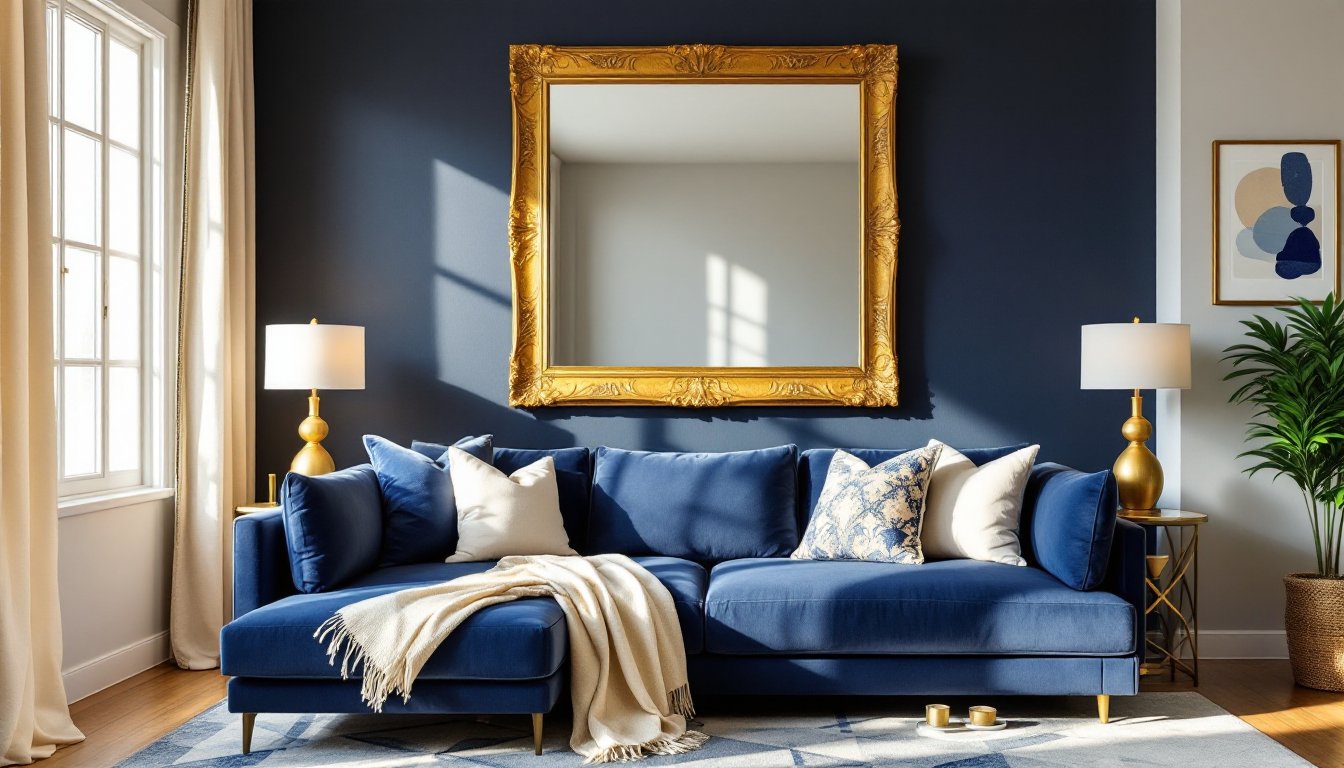
Navy blue (a deep, almost-black blue) paired with gold creates a distinctly modern aesthetic that feels upscale without pretense. Start by choosing one as your dominant color, typically, navy works best as the base for walls, large furniture, or cabinetry, with gold introduced through accents like throw pillows, wall art frames, and metallic hardware. This prevents the space from feeling too dark or overwhelming.
Furniture layout matters. A navy blue sectional or sofa serves as an anchor, with gold-toned end tables, a mirror with a gold frame, or brass lamps providing visual breaks. The key is letting each color breathe, don’t cluster all gold accents in one corner. Spread them throughout the room: a gold-framed mirror on one wall, brass lamp bases on side tables, and metallic knobs on media storage. This approach creates movement and makes the space feel intentional rather than accidental.
Choosing the Right Shades of Navy and Gold
Not all navies or golds are created equal. Navy blue ranges from almost-black undertones (ideal for creating drama) to slightly lighter, more approachable shades that work in smaller rooms. Test paint samples in your actual lighting, morning light, afternoon light, and evening light all shift how navy appears. Brands like Benjamin Moore’s Hale Navy and Sherwin-Williams’ Naval are industry standards because they’re true, consistent blues that don’t pull greenish or purplish under different bulbs.
Gold comes in warm, muted, and bright varieties. Warm golds (closer to brass or honey tones) pair beautifully with navy and feel more traditional. Bright golds lean modern and contemporary. Muted golds (sometimes called champagne or brass) work in transitional spaces. When selecting metallics, look at samples in natural daylight and under your existing lighting fixtures. A gold that looks perfect in the store can appear garish at home if your lighting is too warm or cool.
Accent Walls, Furniture, and Textiles
An accent wall in navy blue is one of the easiest, most impactful changes a DIYer can make. Choose one wall, typically the one behind your seating area or the first wall you see when entering the room. Paint it a deep navy (use a primer-in-one paint like Sherwin-Williams ProClassic for durability and finish quality). The other three walls stay neutral, warm whites, soft grays, or even a pale cream complement navy beautifully.
Furniture selection anchors the design. A blue sofa is bold: if you’re not ready for that commitment, a navy accent chair plus neutral sofa works equally well. Gold accents arrive through smaller pieces: ottomans, throw blankets, lampshades, and pillows. Textiles are where you layer warmth, a cream throw draped over a blue chair, a gold-and-blue geometric pillow, and a patterned rug that blends both colors create depth and texture.
Layering Textures with Blue and Gold Decor
Texture prevents a blue and gold room from feeling flat or sterile. Mix materials: a velvet blue pillow next to a linen cream one, a smooth brass lamp against a textured jute rug, a gloss gold-framed mirror beside a matte blue wall. This variety keeps the eye engaged and makes the space feel curated rather than catalog-matched.
Wall treatments beyond paint also add texture. Shiplap painted navy, wallpaper with gold accents, or even a dado rail (the horizontal trim at about 36 inches up the wall) painted gold and walls above in pale blue creates architectural interest. Projects like these require basic carpentry skills, measuring, leveling, and secure fastening, but deliver professional-looking results. Interior design inspiration from resources like Homedit can show how texture layering works in real rooms, giving you confidence in your choices.
Lighting and Metallics to Enhance the Look
Lighting is non-negotiable in a blue and gold living room. Navy absorbs light, so proper illumination prevents the space from feeling cave-like. Layer your lighting: overhead fixtures for general light, table lamps for task lighting, and accent lighting (like picture lights on art or behind floating shelves) to highlight your gold accents.
Warm-toned LED bulbs (2700K color temperature) complement gold metallics and prevent blue from looking cold. Avoid cool white (4000K+) unless you’re going for a very modern, clinical feel. Brass and gold-finished fixtures naturally warm the space: if you have existing chrome or silver fixtures that don’t match, replacing them is often simpler than painting or covering them. Dimmer switches give flexibility, you can adjust brightness for different moods and times of day.
Gold metallics beyond lighting include picture frame moldings, decorative hardware, and sculptural objects. A gold-leaf mirror reflects light and bounces brightness around the room, counteracting navy’s light-absorbing qualities. Brass bookends, candlesticks, and even a simple gold-painted or gold-leaf wooden tray add shimmer without overwhelming the space. The key: metallic accents should be secondary to the overall design, not dominating it. Modern design trends increasingly favor understated gold touches over heavy gilt, so consider matte or brushed gold finishes alongside polished ones for sophistication.
Budget-Friendly Blue and Gold Updates
You don’t need to overhaul your entire living room to introduce blue and gold. Strategic updates deliver impact at a fraction of the cost of replacing furniture or repainting walls.
Paint projects: Painting an accent wall or a single piece of furniture (like an old dresser or bookshelf) costs under $100 in materials. Quality paint matters for durability, expect to spend $40–$60 per gallon for premium interior paint, which covers roughly 350 square feet per gallon. Two coats on one 10×12 wall requires about 1.5 gallons.
Textiles: Throw pillows, blankets, and area rugs are temporary and affordable. A navy and gold patterned area rug anchors the room without permanent commitment: prices range from $50 for a budget option to several hundred for higher quality. Throw pillows run $20–$50 each depending on fabric quality. Buy a few and layer them for depth.
Swaps and repurposing: Gold-spray paint outdated brass or silver light fixtures, frame mirrors with gold leafing tape, or replace cabinet hardware with brass alternatives (typically $5–$15 per knob or pull). Modern decor ideas from Domino often feature budget-conscious updates showing how simple swaps create designer-level results without major expense.
Artwork and wall decor: Gold-framed prints in blue, navy, and cream tones cost $15–$50 each and transform blank walls instantly. Grouping three to five frames creates impact and feels intentional. If reframing existing art, gold frames themselves run $20–$60 depending on size and quality.