Small living rooms pose a genuine challenge when it comes to furniture selection. A bulky, oversized couch will swallow the space and make a compact room feel cramped, leaving little room for movement or other essential pieces. The good news? Finding the right couch for a small living room isn’t about shrinking your expectations: it’s about making smarter choices. Whether you’re dealing with a studio apartment, a modest living room, or simply limited square footage, couches for small living rooms come in configurations that maximize seating without overwhelming the space. This guide walks through the best options, from sectionals that fit snugly into corners to multi-functional pieces that earn their real estate.
Table of Contents
ToggleKey Takeaways
- Couches for small living rooms should prioritize width over depth—a 70- to 85-inch sectional with shallow arms (6 inches) maximizes seating while maintaining visual openness.
- L-shaped sectionals fit snugly into corners and eliminate dead space, making them ideal for compact apartments when paired with an ottoman or small side table.
- Loveseats and settees (50–70 inches wide) provide comfortable seating for two people using only 60 percent of a full sofa’s footprint, perfect for tight spaces.
- Storage couches and convertible sleepers transform small living rooms into multi-functional spaces, turning wasted square footage into guest beds or hidden storage compartments.
- Floating your couch 12–18 inches from the wall, choosing exposed tapered legs, and using vertical storage create the illusion of a larger room and improve traffic flow.
- Measure doorways, hallways, and room dimensions to scale before purchasing—a successful placement ensures your couch occupies 30–40 percent of floor space without obstructing movement paths.
Sectional Sofas For Compact Spaces
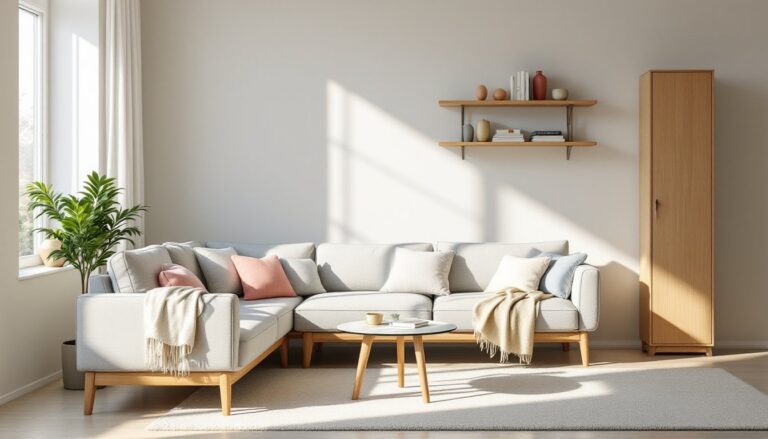
Sectional sofas often get dismissed for small rooms, but the right configuration can actually be the smartest choice. A smaller sectional, typically 70 to 85 inches across, fits tight spaces better than two separate pieces that would create visual clutter. The key is choosing a sectional that’s proportional to your room.
Width matters more than depth. A sectional that extends 8 feet long but only 32 inches deep takes up less perceived floor space than a 90-inch wide, 40-inch deep traditional sofa. Look for arms that are shallower (around 6 inches) rather than deep, wingback styles that eat into your sightline.
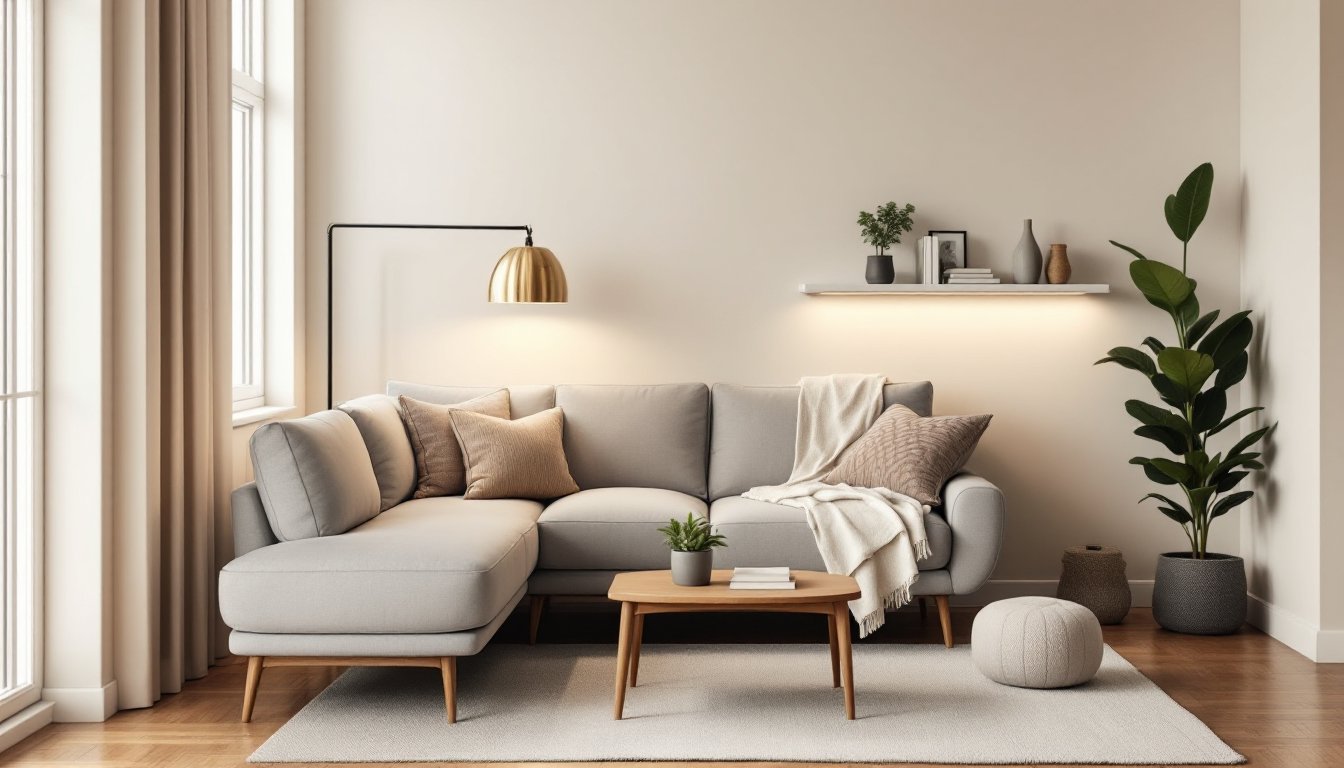
Fabric and leg height affect the visual weight. Light-colored upholstery (grays, creams, or soft neutrals) makes a sectional recede into the room. Exposed wood legs or metal feet create visual separation from the floor, making the piece feel lighter and less anchored. Skirted legs, by contrast, ground a sectional visually and suit traditional spaces better.
L-Shaped Configurations That Maximize Corner Usage
L-shaped sectionals are purpose-built for corners, and when sized properly, they’re ideal for small living rooms. A left-facing or right-facing sectional (rather than a full wraparound U-shape) fits snugly into a corner without leaving dead space behind.
Measure your corner and doorways first. Mark out the footprint on the floor with painter’s tape before ordering. Account for a clear traffic path, typically 18 to 24 inches, from the sectional to adjacent rooms. An L-shaped sectional occupying a single corner often uses existing room boundaries to your advantage instead of creating a new visual division.
Corner placement also creates a natural gathering spot. Recent apartment living design principles emphasize how sectionals in corners anchor a room and make small spaces feel intentional rather than cramped. Pair the sectional with a small ottoman or side table directly in front to complete the arrangement without additional large furniture pieces.
Apartment-Friendly Styles: Loveseats And Settees
If a sectional still feels too large, loveseats and settees are underrated heroes of small living rooms. A loveseat, typically 50 to 70 inches wide, seats two people comfortably and demands roughly 60 percent of the footprint of a full sofa.
Settees (also called benches or tufted sofas) offer vintage charm and a lighter visual footprint. They’re often 48 to 60 inches wide and feature a more delicate silhouette. A settee works particularly well in a room where the couch isn’t the focal point: pair it with a couple of accent chairs and a small round table for balanced seating that doesn’t overpower the space.
Armless or low-arm styles recede visually and work in tight corners. Some loveseats include a chaise extension on one end, giving you lounging flexibility without the bulk of a full sectional. When shopping, test the depth, most apartment-friendly loveseats range from 30 to 36 inches deep, which leaves walkways open in small rooms.
Consider the material durability. Small apartments often see heavier use. Microfiber or performance fabrics resist staining and are easier to clean than delicate materials. If you rent or plan to move frequently, a slipcovered loveseat offers flexibility: you can wash the cover and quickly transform the look.
Multi-Functional Couches With Hidden Storage
In a small living room, every piece of furniture should earn its place. A couch with built-in storage underneath the seat turns dead space into valuable square footage for pillows, blankets, board games, or seasonal items. Storage couches come in configurations from simple liftable seats to full sectionals with drawers and compartments.
Verify the storage accessibility. Some designs require removing cushions to access storage: others have a hydraulic hinge that opens the entire seat frame. For a small space, easy access matters, you don’t want to spend five minutes moving cushions just to grab a winter throw. Check the weight capacity: most built-in storage can hold 40 to 80 pounds depending on the hinge system.
Look for reversible or modular designs. These allow you to swap the configuration as your room’s needs change. If you move from a small apartment to a slightly larger home, a modular sectional can expand with you rather than becoming an item you discard.
Convertible Sleeper Sofas For Dual-Purpose Living
Sleeper sofas transform a living room into a guest bedroom, an essential feature for small homes without dedicated spare rooms. Modern sleeper mechanisms have improved dramatically from the old, lumpy pull-out designs.
Queen-size or full-size sleepers suit most small rooms: twin sleepers are less common but take up less space when extended. Ensure the mattress quality: memory foam or innerspring mattresses are significantly more comfortable than basic futon-style pads. A good sleeper should sleep two people reasonably well and convert in under 30 seconds.
Measure the room with the bed fully extended. A queen sleeper, when pulled out, occupies most of a 10-by-12-foot room. Confirm that the mattress isn’t pressing against walls or doors when open. Premium home design platforms showcase how dual-purpose furniture saves square footage in studio and one-bedroom homes while maintaining style. The trade-off is a slightly thicker cushion stack for the seating position, acceptable in most small rooms but something to feel in person before buying.
Design Tips For Making Your Couch Look Bigger
Sometimes the couch itself is right, but the room arrangement makes it feel cramped. A few design moves can visually open up the space around your seating.
Float the couch away from walls. Counterintuitively, pushing a couch to the wall makes a small room feel smaller. Leave 12 to 18 inches between the back of the sofa and the wall. This creates an illusion of more space and defines the living area as a distinct zone. Use a slim console table or shelving unit behind the couch to maximize that space.
Use vertical storage and decor. Wall-mounted shelves, tall bookshelves, and vertical wall art draw the eye upward, making ceilings feel higher and the room larger. Keep the area around and under the couch visually clear: exposed floor space is one of the most effective small-room design tools.
Choose a low-profile frame and long, tapered legs. Couches with exposed legs create visual separation from the floor, making the room feel airier. Skirted, grounded designs anchor a space and suit traditional interiors but can make a small room feel heavier.
Lighting layers make a difference. A floor lamp beside the couch and a small table lamp avoid harsh overhead shadows. Soft, layered lighting makes any room feel more comfortable and intentional, crucial in compact spaces where every detail is visible.
Measuring And Placement Strategies For Small Rooms
Measuring is the unglamorous foundation of a successful small-room furniture purchase. Skip this step and you’ll regret it when the couch arrives and doesn’t fit through the door or leaves no walking space.
Measure the room width, length, and height. Account for any obstacles: door swings, radiators, windows, or existing furniture. Sketching a to-scale floor plan (even on paper) takes ten minutes and prevents expensive mistakes. Many furniture retailers provide digital room planning tools: use them to visualize the couch in your actual space.
Measure doorways and hallways. A couch that fits the room might not fit into the room. Measure the width and height of hallways, doorways, and any tight corners the delivery team must navigate. Some retailers offer free returns if the piece truly doesn’t fit, but this should be a last resort, not a strategy.
Plan your traffic flow. From the main doorway to other rooms, ensure there’s a continuous walking path at least 18 to 24 inches wide. A couch should anchor one side of the room without becoming an obstacle course. Affordable options from interior design inspiration galleries show how even compact arrangements maintain clear sightlines and movement patterns.
Account for scale and proportion. A couch should occupy roughly 30 to 40 percent of the room’s floor space. If a loveseat is 60 inches wide and your living room is 12 feet wide (144 inches), that’s about 40 percent, a good ratio. Add an accent chair, and you’ve furnished the room without overwhelming it.
Leave room for a small coffee table or ottoman. These functional pieces anchor the couch and define the seating area. A 24-by-36-inch table fits comfortably in front of most loveseats and smaller sectionals. Ensure at least 12 inches between the table and couch for comfortable legroom.