Blue is one of the most versatile colors for living room design, offering everything from serene tranquility to bold sophistication. Whether you’re drawn to soft, sky-inspired hues or deep, moody tones, blue works hard to create atmosphere while remaining endlessly adaptable to different styles and settings. This guide walks through the fundamentals of using blue decor in your living room, from paint selection and furniture choices to layering accessories and balancing light, so you can build a space that feels intentional and welcoming rather than cold or sterile.
Table of Contents
ToggleKey Takeaways
- Blue decor for living rooms offers both psychological calm and design versatility, pairing seamlessly with warm woods, neutrals, and accent colors across various interior styles.
- Select your blue paint shade by testing 2×2-foot swatches at different times of day, as light blues work best in smaller spaces while deep blues create drama in larger, well-lit rooms.
- Layer blue textiles with varying textures and tones—velvet pillows, linen stripes, wool blankets—to add visual interest and prevent the space from feeling flat or monochromatic.
- Balance deep blue walls with neutral upholstery on larger furniture pieces and reserve richer blue tones for accessories and accent items to maintain visual rhythm.
- Warm white lighting (2700K), natural wood accents, and warm metallics like brass are essential to prevent blue decor from feeling cold, while mirrors and layered lighting create depth and warmth.
Why Blue Works So Well In Living Rooms
Blue is inherently calming. The color triggers psychological associations with sky and water, elements we instinctively trust and find restful. For living rooms, where people gather to relax, watch television, or spend quiet evenings, that sense of calm is invaluable. Unlike reds or oranges, which energize and excite, blue allows conversation and presence without overstimulation.
Beyond psychology, blue is also design-neutral in a practical sense. It pairs effortlessly with warm wood tones, neutrals like gray and cream, and accent colors ranging from brass and gold to coral and terracotta. A blue living room doesn’t lock you into one aesthetic: it works as a backdrop for mid-century modern, farmhouse, contemporary, and traditional styles alike.
The color also photographs well and ages gracefully. Trends shift, but blue interiors rarely feel dated the way other trendy colors do. This makes blue a smart long-term investment if you’re planning to live in your home for several years or want a space that won’t demand a complete overhaul in 18 months.
Paint Colors: Choosing The Right Shade Of Blue
Selecting a blue paint color is the single biggest decision in a blue living room scheme. The shade you choose will define the entire mood and set expectations for everything else in the room. Paint samples are essential, apply 2×2-foot swatches to your walls and observe them at different times of day, as natural and artificial light shift the perceived color significantly. A blue that looks serene at noon may feel greenish under incandescent bulbs at night, or washed-out on a gray morning.
Light And Airy Blues For Smaller Spaces
Light blues, think whisper-soft sky tones, pale denim, or barely-there cornflower, work beautifully in smaller living rooms or those without abundant natural light. These shades make walls feel as if they recede, creating an illusion of more space. Benjamin Moore’s “Palladian Blue” and Sherwin-Williams “Sea Salt” are popular, accessible options that read as soft and open without feeling washed out.
Light blues pair well with crisp whites, warm neutrals, and natural wood. They’re also forgiving, slight color inconsistencies from uneven paint application are less visible than they’d be on deeper tones. One caution: very pale blues can veer toward “institutional” if not balanced with warm accents. Add brass fixtures, wood surfaces, or warm-toned upholstery to prevent the space from feeling clinical.
Deep And Rich Blues For Drama And Elegance
Deep blues, navy, midnight, sapphire, and rich denim, create immediate impact and anchor a room with confidence. These shades work especially well in larger living rooms with good natural light or in spaces where homeowners want a design statement. Recent interior design trends reflect a growing appetite for bold, saturated color on living room walls, and deep blue is a leading choice because it remains restful while projecting sophistication.
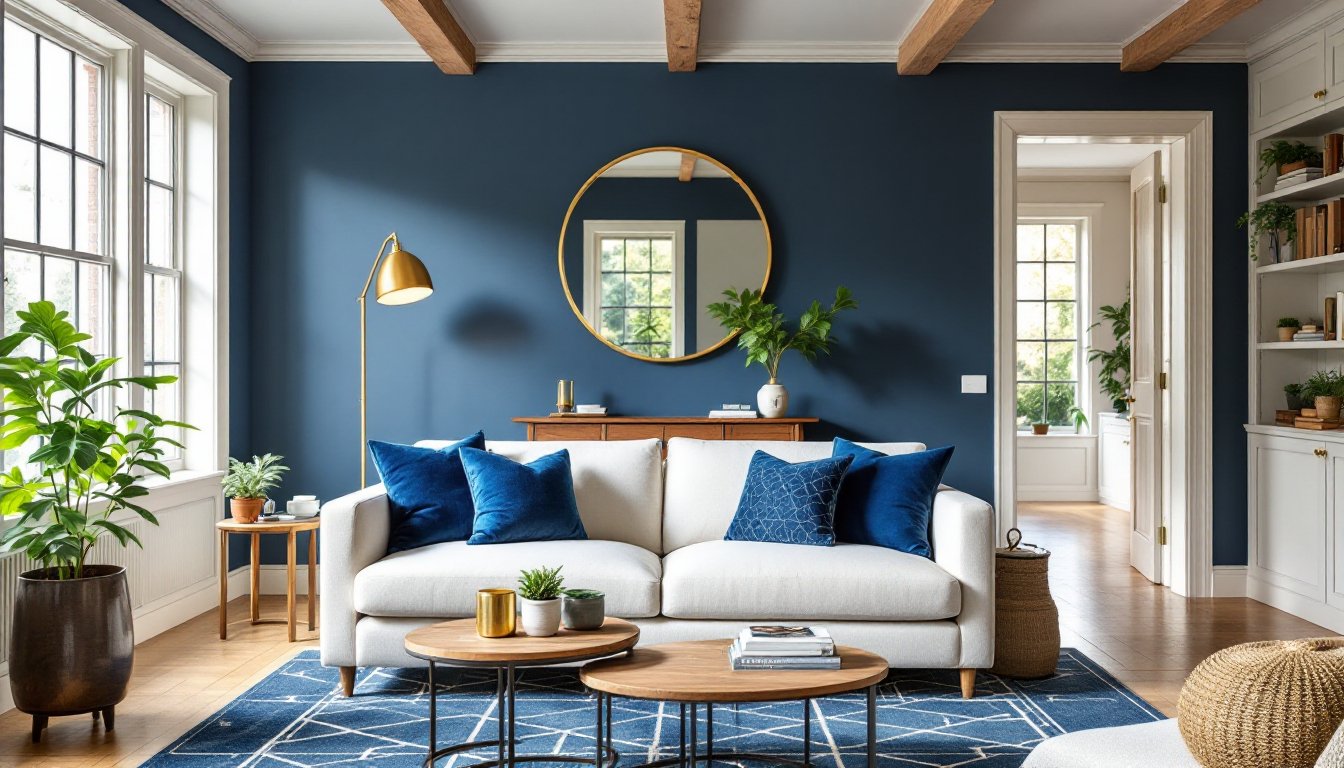
Deep blues demand respect for proportion and light. In a small, dim room, they can feel cave-like and heavy. Test extensively before committing. Pair deep blues with lighter neutrals, cream, soft gray, off-white trim, to prevent the space from feeling too dark. Metallics like brass and gold brighten the scheme, as do light-colored upholstery and mirrors positioned to reflect natural light.
Furniture And Textiles: Incorporating Blue Throughout
Once your wall color is locked in, furniture and textiles become the next layer of blue décor. The approach depends on how bold your walls are.
If your walls are a light blue, you have flexibility: upholster your main seating in a deeper blue for contrast, bring in a blue-patterned area rug, or use blue textiles sparingly to avoid visual overload. A single statement piece, a navy sofa or blue armchair, anchors the room without making it monotonous.
If your walls are deep blue, balance is crucial. Choose neutral upholstery (cream, light gray, or natural linen) for larger furniture pieces, reserving deeper blue tones for smaller items: throw pillows, blankets, or accent chairs. This creates rhythm without saturation.
Layering textiles is where blue really shines. Modern design approaches from Domino emphasize mixed textures and tonal variation within a single color family. Combine a blue velvet pillow with a linen blue striped pillow and a blue wool throw blanket. Vary the depth and finish, matte, shiny, woven, smooth, to add visual interest and prevent the blue from feeling flat.
Area rugs are particularly effective. A blue rug (whether solid, patterned, or textured) grounds furniture arrangement and softens hard floors. If your walls are already blue, choose a rug in a contrasting tone or pattern to avoid the space feeling monochromatic. If walls are neutral, a blue rug becomes the color anchor for the entire room.
Accents And Accessories To Complete Your Blue Living Room
Accents and accessories are where personality enters a blue living room. These smaller touches prevent the space from feeling corporate or cold.
Warm metallics, brass, bronze, and warm copper, are ideal accent metals for blue. They introduce warmth and sophistication without competing with the color scheme. Frames, lamps, side tables, and decorative hardware in these finishes tie the room together. If your palette is more cool-toned, chrome and stainless steel work, but introduce warmth elsewhere through wood or layered neutrals to avoid a sterile feel.
Wood is essential. Natural wood shelving, tables, or a wooden mantelpiece brings organic warmth that blue alone cannot provide. Even light wood tones (oak, ash, natural maple) add coziness: darker walnut or stained wood adds richness.
Accent colors in artwork, throw pillows, or decorative objects prevent blue from dominating. Warm neutrals (cream, greige, tan) are always safe, but don’t shy away from bolder accents: terracotta, warm coral, or mustard yellow create vibrant contrast against blue while maintaining harmony. Design inspiration from MyDomaine shows how thoughtfully layered accents turn a single-color scheme into a complex, engaging interior.
Books, plants, and personal objects matter too. A bookshelf styled with books, plants, and a few decorative pieces creates texture and breaks up solid blue walls. Live plants in neutral or ceramic planters add life and softness. Personal items, family photos, travel mementos, artwork you love, make the space feel inhabited rather than designed.
Lighting And Balance: Making Blue Feel Warm And Welcoming
Lighting is the secret weapon in a blue living room. The wrong lighting can make blue feel cold, moody, or unwelcoming: the right lighting makes it glow.
Natural light is ideal during the day. Blue walls showcase morning and afternoon light beautifully, appearing crisp and alive. But, as evening approaches and artificial light takes over, color temperature matters enormously. Warm white bulbs (2700K color temperature, labeled “warm white” or “soft white”) are essential in blue rooms. Cool white or daylight-temperature bulbs (5000K+) amplify the blue and can feel sterile, particularly in deep blue rooms.
Layer your lighting to avoid harsh single-source illumination. Combine overhead fixtures with table lamps, sconces, or a statement floor lamp. This creates depth and allows you to adjust mood throughout the day. Dimmer switches are highly recommended, they let you soften light intensity in the evening, making the space feel more intimate and warmer.
Mirrors amplify light and prevent blue walls from feeling enclosed. Position mirrors opposite windows to bounce natural light around the room, or across from lamps to spread artificial light more evenly. This is particularly important in rooms with limited natural light or deep blue walls.
Finally, balance cool blue tones with warm textures and finishes. A room painted deep blue but lit with warm light, accented with brass and wood, and furnished in soft fabrics (linen, wool, velvet) feels inviting and sophisticated rather than cold or institutional. Every element, paint, light, metal finishes, and textiles, works together to create the final atmosphere.